Reviews
Part of Accessible bathrooms how it works: remodel sequence
Accessible bathroom materials compared for upkeep and long-term cost
Floors, walls, seats and bars compared on slip resistance, cleaning, contrast and how they age, so the finish that looks best still works in year five.
What to take away
Accessible bathroom materials are chosen for how they look in a showroom and lived with under water, cleaning products and daily transfers.
In an accessible bathroom, three properties matter more than appearance: how the surface behaves when wet, how easy it is to clean without wrecking it, and whether the edges of things are visible to somebody with reduced sight.
- Slip resistance is a property of the surface as maintained, not as installed. Cleaning products change it.
- Large-format tile means less grout to clean, which usually beats the extra cost.
- Contrast between floor, wall, fixture and grab bar is a material decision with a real safety payoff.
- Budget for consumables and laundry as well as finishes.
- Named products have published slip ratings and list prices. Ask for the wet figure in writing before you buy.
Floors
Accessible bathroom materials start at the floor. The table compares named options on wet grip, cleaning, typical installed cost and ten-year cost. Prices are typical U.S. ranges for 2026, not quotes. Ask the supplier for a wet slip test figure in writing and ask what cleaning agents preserve it.
Floor options compared
Textured porcelain
- Wet grip
- Good
- Cleaning
- Grout is work
- Notes
- Ask wet slip rating
Sheet vinyl
- Wet grip
- Very good
- Cleaning
- Easy
- Notes
- Welded seams matter
Small mosaic
- Wet grip
- Good
- Cleaning
- High effort
- Notes
- Grout fails first
Polished stone
- Wet grip
- Poor
- Cleaning
- Sealing required
- Notes
- Rarely right choice
Wet grip
- Altro Pisces safety sheet vinyl
- Very good, R11 rated
- Polyflor Polysafe Hydro Evolve
- Very good, R11 rated
- Daltile or Crossville porcelain, 12x24 textured
- Good when DCOF is 0.42 or higher
- Daltile Keystones porcelain mosaic
- Good, from grout lines
- Polished Carrara marble or granite
- Poor when wet
Cleaning upkeep
- Altro Pisces safety sheet vinyl
- Easy, few joints
- Polyflor Polysafe Hydro Evolve
- Easy, welded seams
- Daltile or Crossville porcelain, 12x24 textured
- Grout is the work
- Daltile Keystones porcelain mosaic
- High effort
- Polished Carrara marble or granite
- Sealing required
Typical installed cost
- Altro Pisces safety sheet vinyl
- $9-$18/sq ft
- Polyflor Polysafe Hydro Evolve
- $8-$16/sq ft
- Daltile or Crossville porcelain, 12x24 textured
- $10-$25/sq ft
- Daltile Keystones porcelain mosaic
- $18-$40/sq ft
- Polished Carrara marble or granite
- $20-$50/sq ft
10-year cost
- Altro Pisces safety sheet vinyl
- $12-$24/sq ft
- Polyflor Polysafe Hydro Evolve
- $11-$22/sq ft
- Daltile or Crossville porcelain, 12x24 textured
- $14-$35/sq ft
- Daltile Keystones porcelain mosaic
- $25-$60/sq ft
- Polished Carrara marble or granite
- $40-$100/sq ft
Notes
- Altro Pisces safety sheet vinyl
- Welded seams matter; do not polish
- Polyflor Polysafe Hydro Evolve
- Low maintenance; check adhesive
- Daltile or Crossville porcelain, 12x24 textured
- Large format cuts grout lines
- Daltile Keystones porcelain mosaic
- Grout stains and fails first
- Polished Carrara marble or granite
- Rarely the right choice here
A floor safe on day one but polished smooth by year two has failed, and nobody notices until somebody slips.
Walls, seats and bars
Wall panels reduce grout and speed installation. Swanstone solid surface panels and Kohler Choreograph walls are two named options. A 60-inch shower wall kit typically costs $1,200 to $3,500, or $2,000 to $6,000 installed.
Tile gives more design freedom and needs more upkeep. Daltile porcelain wall tile typically runs $3 to $15 per square foot for material and $10 to $30 installed; grout sealing every two to five years costs $1 to $3 per square foot.
For seats, a folding wall-mounted seat needs proper blocking and a rated fixing. Moen Home Care wall-mount seats run $150 to $400, Drive Medical shower chairs $50 to $150, and Pressalit folding seats $700 to $1,500.
A freestanding stool needs no storage but needs somewhere to dry.
Bars should be chosen for grip texture and diameter rather than for finish, and they should be visible. A chrome bar on a white tile wall is nearly invisible to somebody with low vision.
Moen Home Care 24-inch bars list around $30 to $70. Delta 24-inch bars run $30 to $60. Bobrick B-6806 36-inch bars run $40 to $90. Installation adds $100 to $250 per bar.
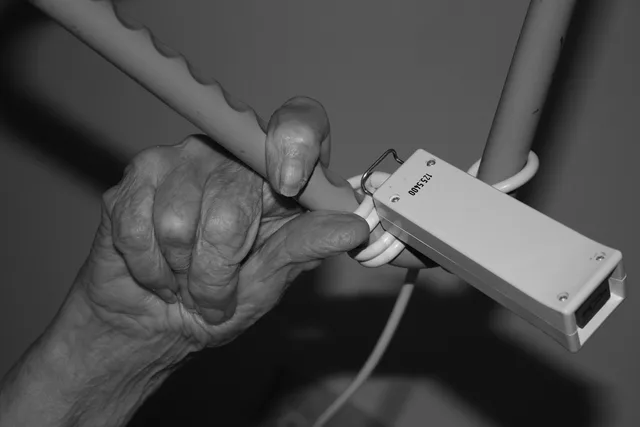
Diameter matters more than most people expect. A bar that is too fat cannot be gripped by a small or arthritic hand. One that is too thin digs in under load. Handle a sample before ordering, wet, with the hand that will use it.
The federal fact sheet on blindness and vision impairments in the workplace describes how much of the adjustment for reduced vision is about contrast, lighting and consistent placement rather than specialist equipment. A bathroom follows the same rule. Contrasting the bar against the wall, and the toilet seat against the floor, costs nothing at specification.
Upkeep is a running cost
Silicone joints, grout, seat fixings and slip finishes all have a life. Replacement costs are typical, not quotes. Silicone at the floor junction runs $150 to $400 every three to five years. Grout cleaning and resealing runs $1 to $3 per square foot, or $150 to $600 for a shower. A new wall-mount seat fixing runs $50 to $150.
Consumables matter too. Adult briefs typically cost $0.50 to $1.50 each, or $60 to $300 a month depending on use.
Households often assume incontinence products are covered somewhere. They usually are not.
Laundry adds roughly $20 to $60 a month. Medicare states plainly on its page for incontinence supplies and adult diapers that Original Medicare does not cover them, though some Medicare Advantage plans offer extra benefits. Put that in the household budget alongside the maintenance items listed in accessible renovation upkeep costs.
Choosing well
Pick the floor first, because it constrains everything else, and pick it on wet performance rather than appearance. Then choose wall finish, then fixtures, then bars. The construction sequence those choices feed into is in what happens during an accessible bathroom project.