Features
Part of Home mobility equipment reviewed for 2027
Small homes still have room for the right mobility equipment
Mobility equipment that works in a small home: ceiling tracks instead of floor hoists, narrow-base frames, folding ramps, and where equipment parks and charges.
In a small home, mobility equipment competes with the people. A mobile hoist parked in a hallway blocks the hallway. A power chair charging in the only circulation space is a trip hazard by evening. The equipment that works in tight homes is generally the equipment that goes up, folds, or lives somewhere other than the floor.
What to take away
- Ceiling track hoists take no floor space, which frequently makes them the small-home answer. The Guldmann GH3, a fixed-rail unit, lifts up to 175 kg (385 lb) from a rail above the bed.
- Give every device a parking spot in the drawing. If you do not, the hallway becomes it.
- Charging points belong where the device rests, not where the outlet happens to be.
- Beds and specialist mattresses are the largest single space demand people underestimate.
Ceiling track hoists, narrow frames and folding ramps
A mobile hoist needs somewhere to live, room to maneuver and clear floor under the bed. A ceiling track hoist needs structural fixing and then occupies nothing. In a small bedroom that trade is usually worth making.
Three track systems that show up in small rooms are the Guldmann GH3 (175 kg / 385 lb), the Prism Medical C-450 (450 lb) and Handicare SystemRoMedic modular rails. A single-room track and lift typically runs $3,500 to $7,000 installed in US markets, depending on rail length and ceiling structure.
The same logic favors wall-hung basins, fold-down shower seats and wall-mounted grab rails over anything with legs.
A Pressalit wall-hung basin mounts on the wall and adjusts in height, so no legs touch the bathroom floor.
A Moen Home Care folding shower seat (model DN7105) folds flat against the wall and typically costs $150 to $250. Moen Home Care grab bars run about $30 to $60 each.
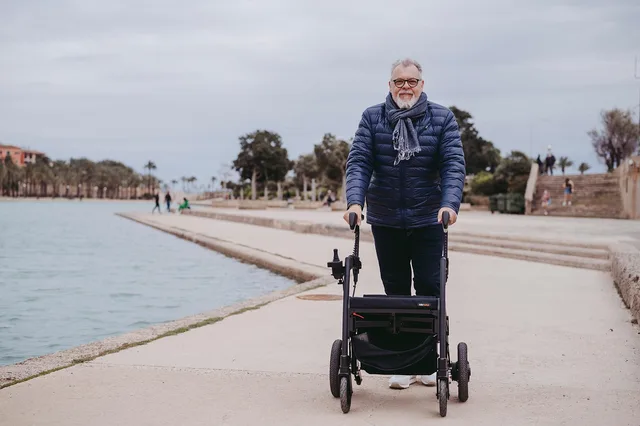
Narrow-base equipment is the other lever. Rollators and frames vary more in width than people realize, and a difference of two or three inches decides whether a hallway can be used with the frame rather than around it.
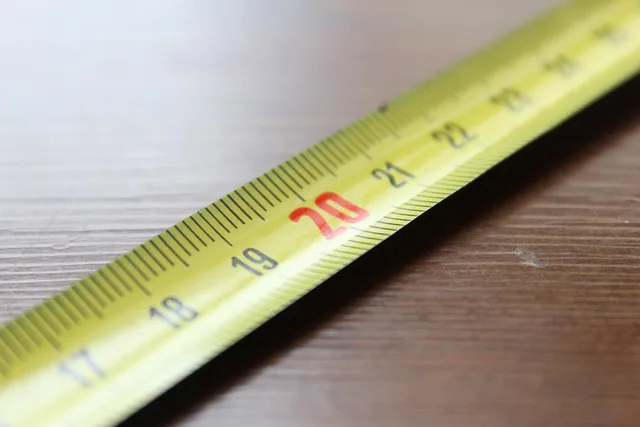
The Drive Medical Nitro rollator is about 25 inches wide and costs typically $180 to $300. The ByAcre All Terrain carbon rollator is roughly 22 inches wide and 16.5 lb, with a typical price of $800 to $995. Ask the supplier for the overall width including the hand grips, since that is the dimension a doorway actually sees.
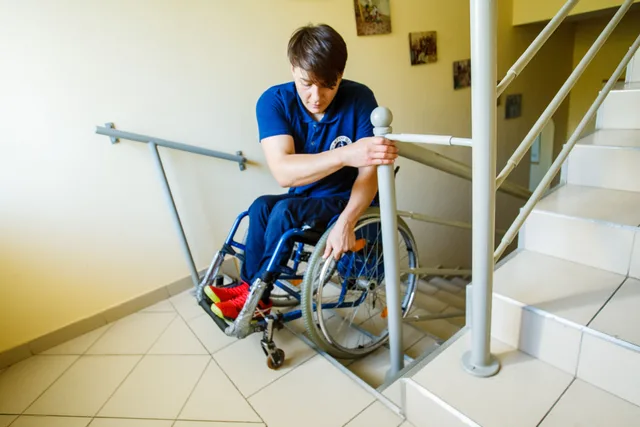
Folding ramps solve the threshold problem without a permanent build. The EZ-ACCESS Suitcase Singlefold AS ramp folds into a suitcase shape, carries an 800 lb capacity and typically sells for $250 to $450 for a 5 foot length. Prairie View Industries makes a similar singlefold model. Store it deliberately rather than leaning it somewhere.
Beds are bigger than people expect
A specialist bed and transfer space can fill a small bedroom alone.
Pressure-relieving systems add width, noise, and a pump that needs power.
Medicare's page on air-fluidized beds describes a category of bed provided only in specific clinical circumstances, and it is a useful illustration of how large and demanding this equipment can be. If any bed of this kind is a possibility, measure the room for it before choosing which room becomes the bedroom.
Parking and charging
- A recess or alcove for the chair, out of the walking route
- An outlet at that spot, on its own circuit if the device asks for one
- A place for crutches or a frame beside the bed and beside the bathroom door
- Somewhere outdoors, covered and secure, for a scooter if one is used
- A hook or shelf for slings and cushions so they are not stored on the floor
- A shallow drawer or basket for chargers, spare batteries and the manual
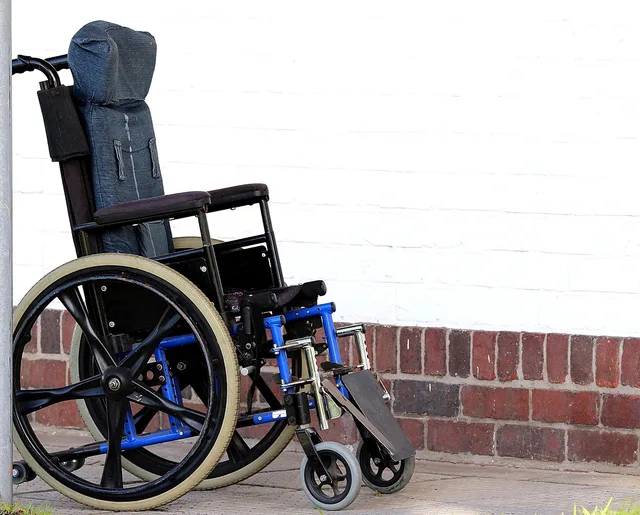
Two chairs fit the recess idea. The Pride Mobility Go-Chair has a 25.5 inch turning radius and breaks down for storage, typically $1,300 to $1,800. The Whill Model C2 is 22.6 inches wide with a 29.9 inch turning radius, typically $3,000 to $4,000.
For a scooter, the Pride Mobility Go-Go Elite Traveller 3-wheel has a 32 inch turning radius and disassembles, typically $1,000 to $1,500, and it wants a covered outdoor parking spot.
None of these need a designer. They need deciding, and writing on the plan, before the equipment turns up and settles wherever there is room.
When the house cannot hold everything
Sometimes the honest answer is that a small home cannot accommodate every piece of equipment and every hour of care at once. Day programs exist partly for this reason, and the VA's description of adult day health care sets out how a structured daytime service works alongside living at home.
Using one is not a failure of the adaptation. It is one of the levers available when space and staffing are both tight.
The small-room version of the same trade-offs in a bathroom is in small-space options for accessible bathrooms, and the categories of equipment are explained in our beginner's guide to home mobility equipment.