Rules
Part of Home mobility equipment reviewed for 2027
Home Mobility Products Rules: Permits by Setup
Home mobility products rules vary by installation. See which permits, code offices, zoning checks, and property approvals to confirm for ramps, lifts.
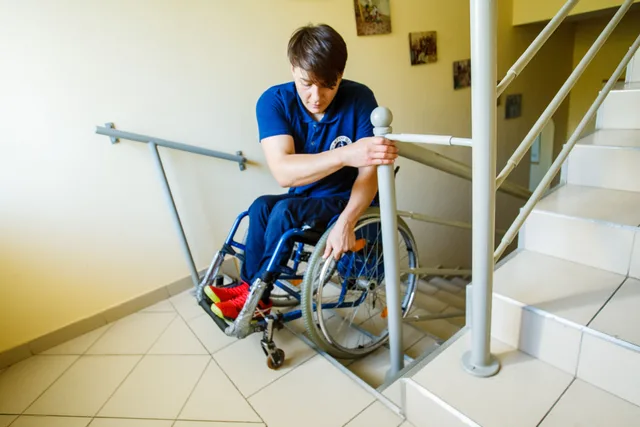
Home mobility products rules depend on how a product is installed: whether it is anchored, changes a structure or grade, or needs new wiring. Common ramps, lifts, and ceiling hoists map to the permit categories and local offices to check before scheduling installation.
The local building department or permit office can identify the adopted code, required applications, and inspections for the specific property and work; there is no single national permit form for these products.
Match the product setup to permit categories
Describe the installation, not just the product name. A portable ramp and a permanent ramp can lead to different decisions, just as a lift that uses an existing outlet may raise different permit questions from one that requires new wiring or a floor opening.
These are typical starting points, not guaranteed permit determinations.
| Product and installation | Approval or permit category to check | Office to ask |
|---|---|---|
| Portable threshold ramp, not fixed to the building | Usually no building permit; confirm if its placement or fixing changes its status | Building department or permit office |
| Freestanding modular ramp | Building review or inspection may depend on its size and whether it is anchored | Building department or permit office |
| Permanent built ramp | Building permit is commonly required; zoning review may also apply | Building department and zoning office |
| Stair lift | Electrical permit may apply; installation or structural work can prompt additional building or lift review | Building department, electrical office, or local lift authority |
| Vertical platform lift | Check building, electrical, mechanical, and locally required lift permits or inspections | Building department and any local lift authority |
| Through-floor lift | Check structural and building review for the floor opening, plus electrical, mechanical, or lift review | Building department and any local lift authority |
| Ceiling-track hoist | Structural review of the ceiling or roof-framing attachment; electrical review if new wiring is involved | Building department and electrical office, as applicable |
A powered product is not automatically an electrical-only installation. A stair lift, platform lift, or through-floor lift can involve more than one permit category if the work also affects framing, structure, or a building opening.
For the electrical portion, ask whether the locally adopted electrical code, often NFPA 70 (the National Electrical Code), applies to the new circuit or connection and which edition the jurisdiction uses.
Some local rules also specify a lift safety standard. For example, Maryland incorporates ASME A18.1-2023, the Safety Standard for Platform Lifts and Stairway Chairlifts, into its regulation; that is a Maryland requirement, not a nationwide edition rule (Maryland lift regulation).
Ask the local building or lift authority which standard and edition applies to the proposed equipment. If you are still deciding between products, compare home mobility product choices before requesting a product-specific permit determination.
Check zoning separately for outdoor ramps
A building permit does not settle where an outdoor ramp may sit. A permanent ramp can raise zoning questions about setbacks, lot coverage, or historic-district review. Those are separate from structural and building-code review, so confirm the proposed location with the zoning office as well as the building department.
Ask about the actual footprint and route before the design is finalized. If the location must change to fit a zoning requirement, that may affect the ramp layout. For space-constrained homes, small-space mobility options may help you consider where equipment can fit, but the zoning office must assess the proposed outdoor work.
Approvals a permanent ramp triggers
- Check building code for structure
- Check zoning for setbacks and lot coverage
- Check historic district review if applicable
- Notify insurance about powered lifts
- Ask about structural fixing for ceiling hoists
Get housing and insurance decisions for the installation
A permit does not replace permission that may be required by a landlord, condo association, or co-op. Before ordering, provide the relevant property contact with a description or drawing that identifies what will be attached, altered, or placed outdoors.
For a rental installation involving structural changes, HUD says a housing provider may require needed building permits and workmanlike installation; see HUD reasonable-modification guidance. Check the rules and process that apply to the particular property. The federal accessibility standards do not tell a homeowner what to install.
Insurance is another separate check, especially for powered equipment or structural attachments. Ask your carrier whether it wants notice before a lift is installed and whether the policy addresses damage involving equipment that was not disclosed. For a ceiling hoist, describe the proposed framing attachment as well as the equipment.
Confirm the exact scope before booking the vendor
Ask the supplier for a written description of the proposed work. It should identify whether the installation is anchored, needs new wiring, changes grade or drainage, attaches to framing, or creates a floor opening. That lets the local offices assess the installation rather than relying on a general product label.
Use that description to confirm the required building, electrical, mechanical, or lift application and any inspection with the relevant permit office. For an outdoor permanent ramp, confirm zoning review and placement.
If the home is rented or part of a condo or co-op, confirm property approval; if the installation involves powered equipment or structural fixing, ask the insurer whether notice is needed.
Do this before you accept an installation date or pay a deposit against a design that has not been approved. For a broader equipment-planning checklist, see the home mobility products checklist.
Once the permit route is clear, see the home mobility equipment reviewed for how the products themselves compare.